My role
Sole ID, strategy through development
Given only a high-level topic outline and no finalized AI policy, I transformed an initial concept into two complete learning experiences. I defined the instructional strategy, authored and expanded the content, created realistic Copilot learning labs and partnered with SMEs and leadership to refine and validate the material as guidance evolved.
AI guidance was new for the organization, and there was no existing curriculum, finalized policy or established approach to translate into training. The initial outline provided a starting point, but the learning journey, content depth and practical application needed to be defined.
Working within an evolving timeline, I transformed that starting point into two complete learning experiences by creating the structure, expanding the content, designing Copilot practice activities and partnering with SMEs and leadership to refine the material.
Nobody had made these judgment calls yet. I made them first, then built the training around them.
The first step was transforming the initial outline into two distinct learning experiences with different purposes and lifespans: an evergreen foundation covering how generative AI works and how to use it responsibly, and a separate hands-on lab focused on the organization's approved AI tool, Microsoft Copilot.
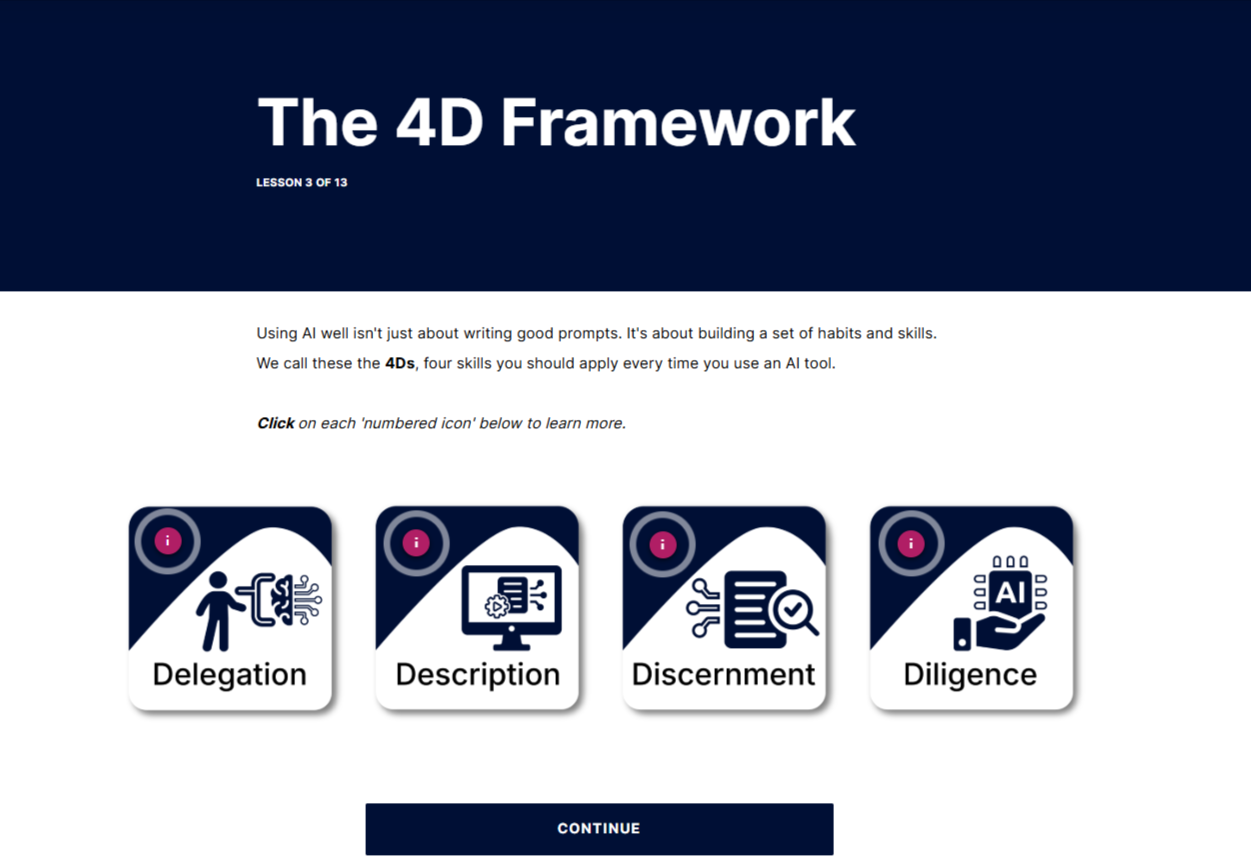
With limited source material available, I synthesized existing AI literacy approaches and adapted the 4Ds framework (Delegation, Description, Discernment, Diligence) to structure the learning experience. From there, I developed organization-specific guidance, examples and activities that connected responsible AI principles to everyday employee decisions.
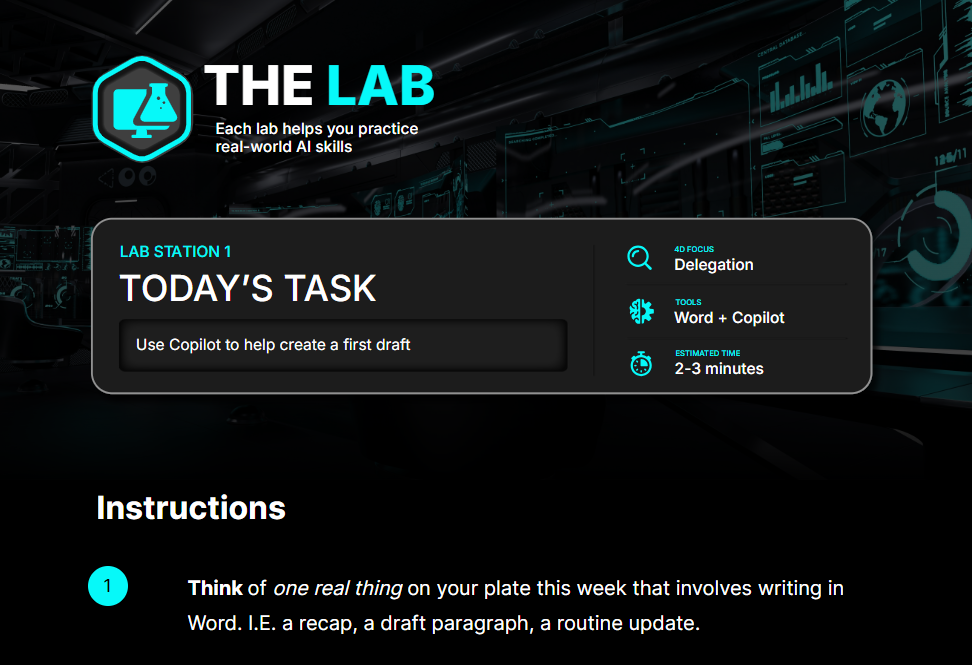
The biggest challenge was moving beyond awareness into practical application. I designed hands-on Copilot labs that gave employees a safe environment to experiment with prompts, evaluate outputs and practice responsible AI use with realistic workplace examples.
Before launch, I partnered with the L&D team to test every hands-on exercise against the live tool, ensuring the instructions matched the current experience. Because AI tools evolve quickly, validating the learner experience was just as important as designing the content itself.
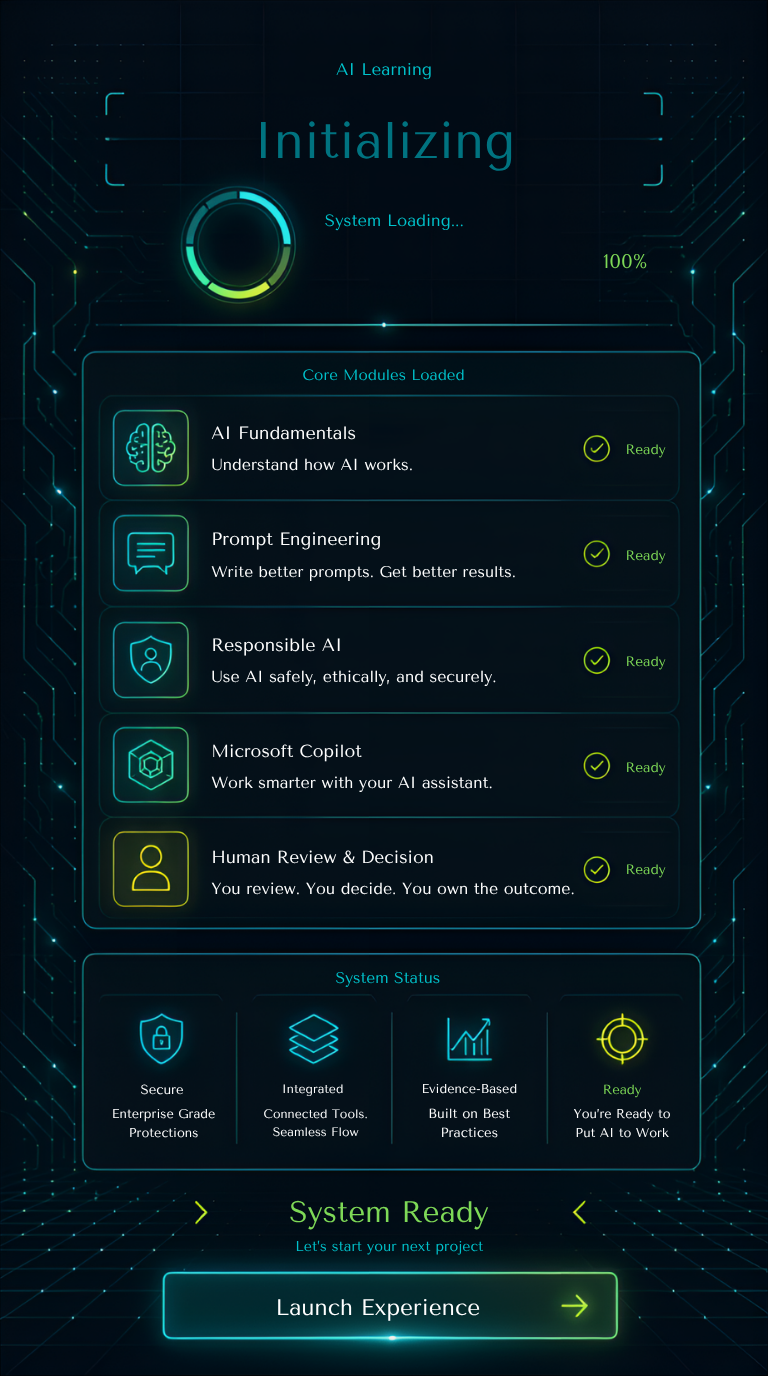
AI moves fast, but the approved tool moves faster. New features, changing capabilities and evolving limitations meant a single course would quickly become outdated. I separated the stable foundation from the tool-specific practice lab, allowing the core learning to remain evergreen while the lab can evolve independently as the technology changes.
Only one AI tool was approved at the time, but that could change. I designed the lab as a repeatable structure rather than a one-time solution, creating a model that could support future tools without rebuilding the entire learning experience.
Knowing how to use AI responsibly requires more than understanding concepts. I designed hands-on Copilot labs that gave employees opportunities to practice writing prompts, reviewing outputs and making decisions in a safe environment before applying those skills in their daily work.
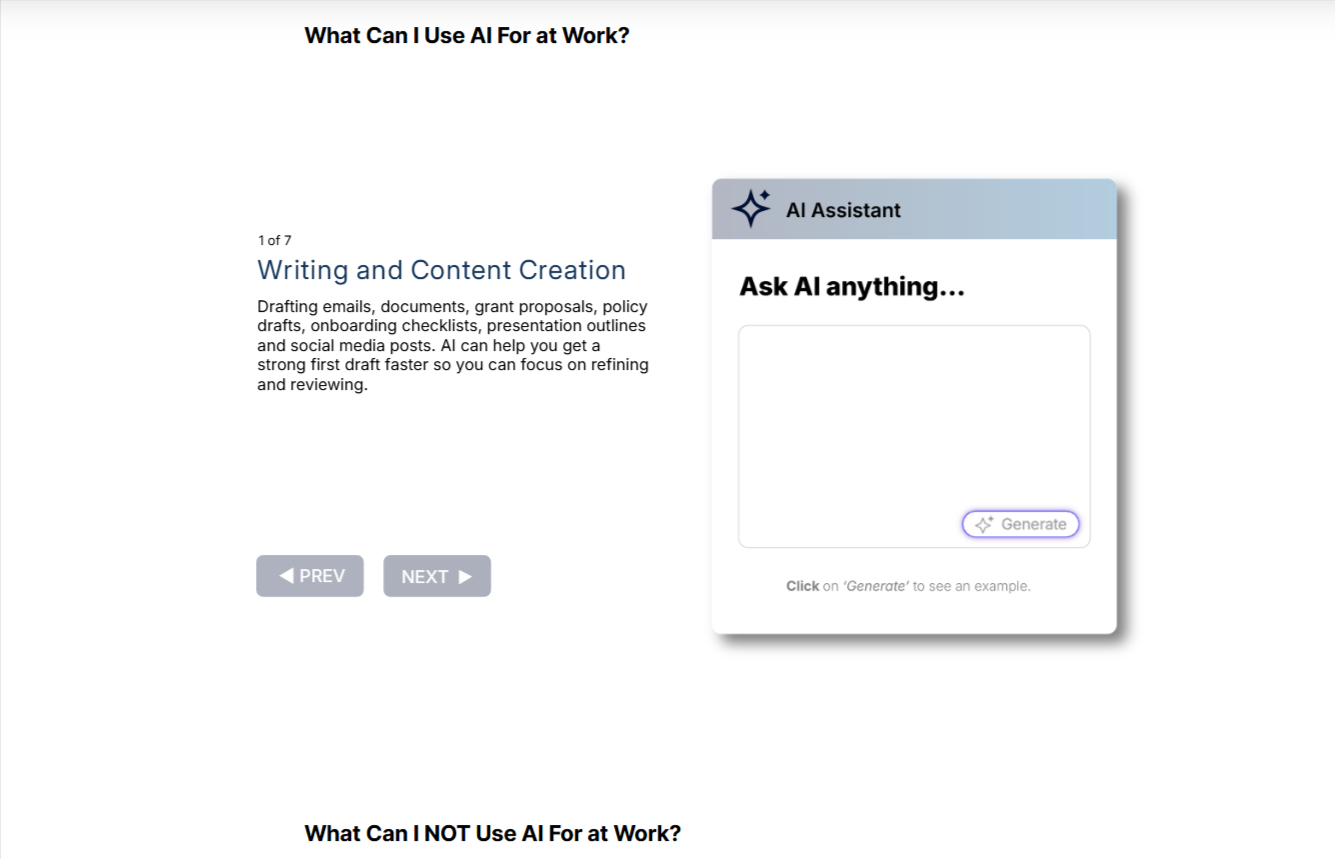
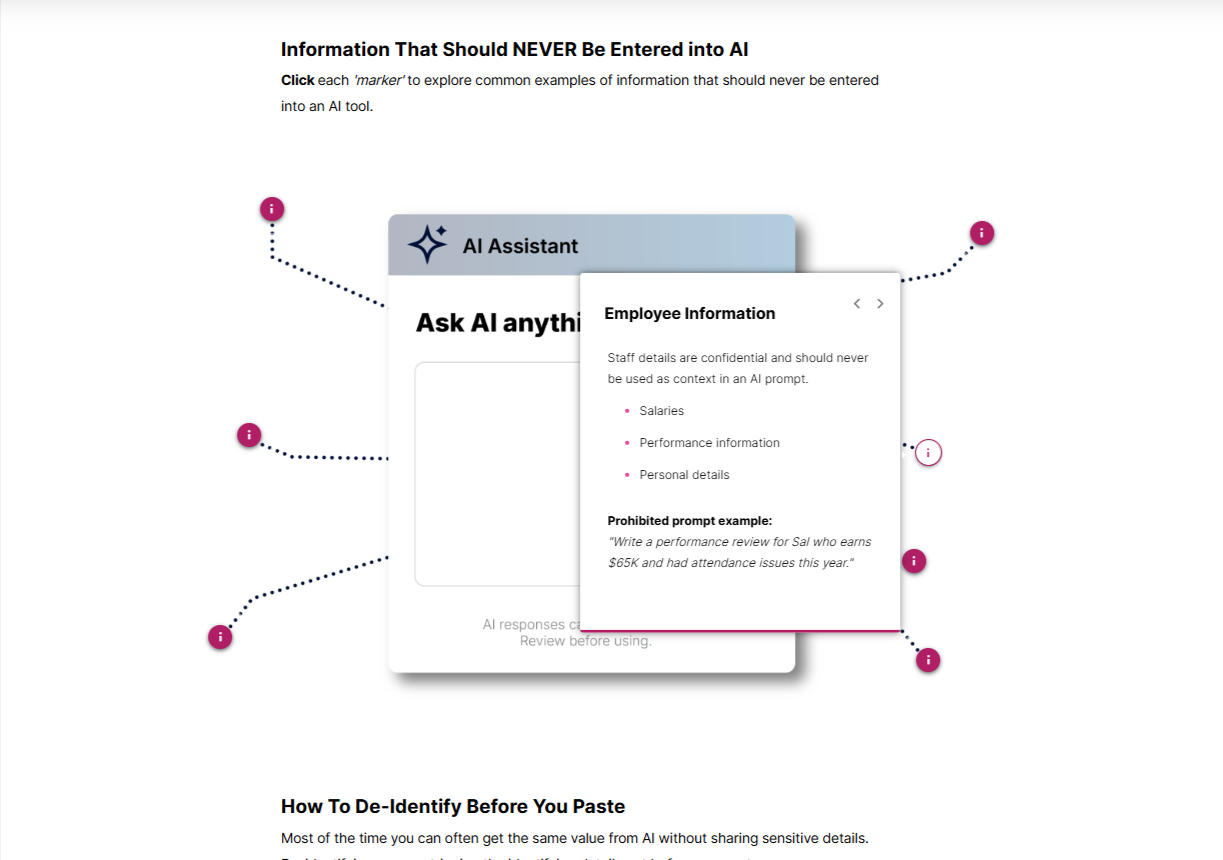
The experience combined the 4Ds framework, custom visual storytelling and hands-on Copilot activities to help employees understand not only what AI can do, but how to use it responsibly. I created the visual assets in Illustrator, developed motion in After Effects and built interactive components using Rise and embedded Storyline blocks.
This course is in final development, so completion data alone won't tell the full story. The meaningful outcomes will come after employees have had time to apply what they learned: confidence using AI tools, responsible decision-making and adoption of approved AI practices. Results to follow.